
How Forensic Meteorologists Help Win Your Legal Case
Last Updated: 2025-12-23
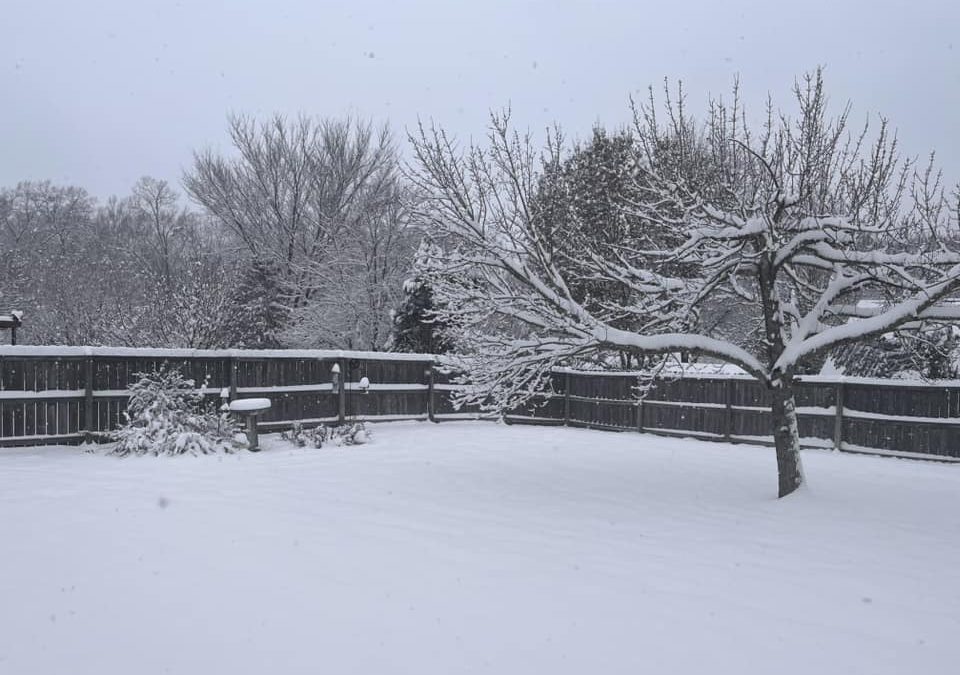
A pedestrian slips on January 15, 2024, at 0743 local time outside a Memphis office building. She fractures her hip. Her attorney alleges the property owner failed to clear the ice. The defense claims no precipitation fell. Both sides need a meteorologist expert witness who can determine whether freezing rain accumulated between 0530-0745 local (1130-1345 UTC) on that specific block.
| Location | Memphis, TN (Mid-South region) |
|---|---|
| Time Window | 2024-01-15 05:30–07:45 CST (11:30–13:45 UTC) |
| Max Wind | Example scenario: 12 kt (14 mph) at KMEM ASOS around 2024-01-15 12:53Z; actual values depend on specific event record |
| Freezing Rain | Example scenario: 0.08 in liquid equivalent during analysis window; actual hourly totals from archived observations |
| Data Sources | NOAA NCEI ISD, NWS Surface Analysis, Local Mesonet |
| Confidence | High (ASOS + mesonet agreement; thermal profile documented) |
This scenario repeats across premises liability, traffic accident reconstruction, and construction litigation. Weather conditions directly affect legal outcomes. A certified meteorologist witness transforms atmospheric data into courtroom evidence that judges and juries understand.
CLICK HERE TO FIND A METEOROLOGIST EXPERT WITNESS
Three Ways Meteorologists Win Cases
Weather litigation experts establish causation through data-driven reconstruction. They determine whether conditions existed to support or refute liability claims. Courts rely on their testimony when they use federal meteorological archives that have documented quality-control procedures and consistent archival practices, and when those records are properly authenticated as public or business records.
Slip-and-Fall Premises Liability Cases
A forensic weather consultant retrieves surface observations from the nearest NOAA ASOS or AWOS station. These systems record temperature, dew point, precipitation type, and accumulation every hour or more frequently. The expert applies pavement temperature models that account for thermal mass, solar radiation, and latent heat of fusion.
Key Analysis Components:
- Precipitation onset time (UTC and local) from METAR observations
- Surface temperature crossing 32°F threshold using ASOS 1-minute data
- Ice accumulation rate from liquid-equivalent precipitation totals
- Freeze-thaw cycle documentation for refreezing scenarios
Regional Variation: Gulf Coast properties face different ice formation physics than Mountain West locations due to pavement thermal mass differences and solar angle variations.
Motor Vehicle Accident Reconstruction
Meteorology accident reconstruction quantifies visibility distance in fog, snow, or heavy rain. It establishes hydroplaning risk from rainfall intensity. It calculates crosswind force on trucks and RVs. These factors determine whether reasonable drivers could have avoided the collision.
Traffic Accident Weather Analysis:
- Visibility from ASOS present weather sensors and human observer remarks
- Rainfall rate from tipping-bucket gauges (0.01-inch resolution)
- Wind gust magnitude and direction for vehicle stability calculations
- Road surface state modeling (wet, icy, snow-covered) based on thermal and precipitation data
Critical Distinction: Weather experts establish atmospheric conditions. Accident reconstructionists apply those conditions to vehicle dynamics, braking distance, and sight-line geometry.
Construction Delay and Force Majeure Claims
Contractors invoke weather delay clauses when conditions prevent safe work. Owners dispute those claims. A meteorology expert witness compares actual conditions against contract specifications and industry standards. This determines whether delays were reasonably foreseeable or constituted force majeure events.
Construction Weather Documentation:
- Daily precipitation totals vs. contract work-stoppage thresholds (commonly 0.10-0.25 inches)
- Wind speed exceedances for crane operations (typically 25-35 mph limits)
- Heat index calculations for OSHA work-rest cycle requirements
- Historical climatology establishes “normal” weather patterns for the project duration
Court Admissibility Standards for Meteorology Expert Testimony
Federal courts apply Daubert v. Merrell Dow Pharmaceuticals standards. Most state courts follow Daubert or maintain similar reliability requirements. A minority uses the Frye v. United States general acceptance test. All require that meteorology court testimony rest on scientifically valid methodology.
Daubert Reliability Factors Applied to Forensic Meteorology:
Factor 1: Testing and Validation
NOAA maintains continuous quality control programs for ASOS networks. Instruments undergo calibration against NIST-traceable standards. Temperature sensors are specified to meet approximately ±1-2°F accuracy under most conditions, based on NWS and FAA technical documentation and evaluation studies. Precipitation gauges show ±5% accuracy under test conditions. Wind sensors typically achieve wind speed accuracy within about ±2 knots or 5% of the measured speed, whichever is greater, with direction errors on the order of a few degrees. These performance metrics are published in federal technical documents.
Factor 2: Peer Review and Publication
Atmospheric data collection methods appear in American Meteorological Society journals, including Bulletin of the American Meteorological Society, Weather and Forecasting, and Journal of Applied Meteorology and Climatology. Federal Meteorological Handbook No. 1 documents surface observation procedures. These publications undergo independent peer review before acceptance.
Factor 3: Known Error Rates
ASOS precipitation measurements show systematic undercatch in high wind conditions, often on the order of several percent for rain and substantially larger for snow, with bias magnitude depending on wind speed, precipitation type, and gauge shielding. Radar-derived precipitation estimates vary by ±25-50% compared to gauge networks in complex terrain. National Lightning Detection Network studies report cloud-to-ground flash detection efficiency generally above 95%, with median location errors often better than about 100-200 meters over much of the contiguous United States, and larger errors near the network periphery.
Why This Matters: Expert witnesses who acknowledge measurement uncertainty demonstrate scientific rigor. Courts favor testimony that quantifies confidence rather than claiming absolute precision.
Factor 4: General Acceptance
The Federal Aviation Administration, the National Weather Service, and the Department of Defense rely on NOAA datasets for operational decisions affecting public safety. These agencies would not use unreliable data for aviation operations, severe weather warnings, or military planning. Such widespread operational acceptance establishes general acceptance in the relevant scientific community.
Data Sources That Support Weather Expert Witness Services
Credible forensic meteorology depends on authoritative datasets with documented provenance. Federal archives maintained by NOAA provide the gold standard because they include quality flags, instrument metadata, and continuous archival extending back decades.
NOAA National Centers for Environmental Information
NCEI archives constitute the world’s largest weather and climate dataset. Attorneys should request analysis based on NCEI holdings because courts recognize their chain-of-custody documentation and standardized quality control protocols.
Critical NCEI Datasets for Litigation:
- Integrated Surface Database (ISD): Contains ASOS, AWOS, and cooperative observer data with 1-minute to hourly temporal resolution
- Global Historical Climatology Network (GHCN-Daily): Daily summaries including maximum/minimum temperature and total precipitation
- NEXRAD Level-II Archive: Complete radar base data showing reflectivity, velocity, and dual-polarization products
- Storm Events Database: NWS-verified severe weather reports with coordinates, times, and measured values
Regional Weather Networks
State mesonets deploy stations at higher spatial density than federal networks. Oklahoma Mesonet, West Texas Mesonet, and Kentucky Mesonet provide observations every 5-20 miles rather than the typical 50-100 mile spacing of ASOS sites. These networks fill critical data gaps but require site metadata review.
Mesonet Considerations: Instrument exposure varies significantly. A mesonet station in a farm field measures different conditions than an ASOS at an airport or a location downtown. Competent forensic weather consultants document site characteristics and apply representativeness corrections when needed.
Lightning Detection Networks
National Lightning Detection Network operated by Vaisala uses time-of-arrival sensors to locate cloud-to-ground lightning with typical median location accuracy on the order of 100-200 meters over much of the network, and larger errors at the margins. Earth Networks Total Lightning Network adds intracloud flash detection. Both networks require subscription access and are not freely available like NOAA datasets.
Lightning Data in Litigation: Property damage claims involving fire or electrical system failure often hinge on whether lightning struck the structure. Detection network data establishes flash locations with GPS-referenced timestamps. This evidence either supports or refutes lightning-strike claims.
Regional Weather Patterns Affecting Legal Cases
Atmospheric phenomena vary by geography. Legal strategies must account for regional climatology when evaluating weather expert witness testimony. What constitutes “foreseeable” weather in Louisiana differs from Colorado.
Southeast and Gulf Coast
- Frequent afternoon thunderstorms from May through September with peak lightning activity
- Hurricane exposure requiring tropical cyclone wind field analysis and storm surge modeling
- High humidity affecting pavement drying times and mold growth calculations
- Rare but high-impact ice storms causing construction delays and traffic accidents
Great Plains and Midwest
- Severe thunderstorm activity producing large hail (>1 inch diameter) and damaging winds
- Tornado touchdowns requiring Enhanced Fujita Scale analysis by NWS damage survey teams
- Blizzard conditions with wind chill and visibility considerations for traffic accident cases
- Derechos causing widespread straight-line wind damage to multiple properties
Mountain West and High Plains
- Downslope wind events (Chinook, Bora) producing sustained high winds lasting hours
- Complex terrain affecting radar coverage and requiring surface observation reliance
- Snow load analysis for roof collapse cases using SNOTEL network data
- Rapid temperature changes affecting construction materials and ice formation
Cost Structure for Hiring a Meteorologist Expert Witness
Attorney budget planning requires understanding typical fee structures. Rates vary by expert qualifications, case complexity, geographic location, and timeline urgency.
Initial Consultation and Case Review: Most certified meteorologist witnesses charge $200-400 per hour for initial case assessment. Expect 3-5 hours for preliminary data gathering and feasibility analysis. Total cost: $600-2,000.
Comprehensive Written Report: Detailed analysis with weather maps, chronologies, data tables, and methodology documentation typically costs $2,500-8,000. Rush reports requested within 5 business days incur 50-100% surcharges. Complex multi-day events or regional analyses requiring 30+ hours of work may exceed $10,000.
Deposition Testimony: Hourly rates apply to deposition attendance, preparation time (typically 2-4 hours), and travel time. Full-day depositions commonly cost $2,000-5,000 including preparation. Video depositions reduce travel costs but still require preparation time billing.
Trial Testimony: Daily rates for trial testimony vary significantly based on expert credentials and case complexity. Expect $3,000-8,000 per day plus standby time. Multi-day trials require daily rates for all days expert must remain available, not just testimony days.
Travel Expenses: Reimbursement follows standard business travel rates: mileage at IRS rate (currently $0.67/mile), airfare at economy class, lodging at mid-range hotels, and meals at per diem rates. Experts typically bill portal-to-portal travel time at hourly or half-hourly rates.
SERVICES METEOROLOGY EXPERT WITNESSES PROVIDE
Frequently Asked Questions About Weather Litigation Experts
What qualifications should I look for when hiring a meteorologist expert witness?
Prioritize a meteorologist who holds relevant professional certifications such as American Meteorological Society Certified Consulting Meteorologist (CCM), has federal and state court testimony experience, and demonstrates documented familiarity with NOAA/NCEI archives. Request CV, published case outcomes, and attorney references specific to your case type before retention.
How do forensic meteorologists help in slip-and-fall cases?
Weather litigation experts retrieve precipitation data from NOAA ASOS stations and apply pavement physics models to establish freezing onset times, ice accumulation rates, and duty-to-clear timelines under premises liability statutes.
What is the difference between Daubert and Frye admissibility standards?
Daubert (federal courts and most states) requires judges to assess methodology reliability, error rates, peer review, and general acceptance. Frye (minority of states) asks only whether the scientific community generally accepts the method.
Can weather analysis determine liability in motor vehicle accidents?
Meteorology accident reconstruction establishes visibility distances in fog or snow, hydroplaning risk from rainfall rates, and crosswind forces on high-profile vehicles. Liability determination requires additional accident reconstruction engineering expertise.
How much does it cost to hire a forensic meteorology expert?
Certified meteorologist witnesses typically charge $200-500 per hour depending on credentials and complexity. Initial case review (3-5 hours) costs $600-2,500. Comprehensive written reports with maps and chronologies range $2,500-8,000. Deposition and trial testimony bill separately.
What data sources do forensic weather consultants use in litigation?
Primary public sources include NOAA NCEI surface observations, NWS NEXRAD radar archives, and Storm Prediction Center severe weather reports. Proprietary sources such as National Lightning Detection Network or Earth Networks data are obtained through subscription or case-specific licensing. Regional mesonets supplement federal networks in data-sparse areas.
Common Mistakes That Undermine Weather-Related Legal Cases
Relying on Consumer Weather Apps: Consumer weather services lack documented quality control and do not archive data with chain-of-custody standards. Courts dismiss expert opinions based on Weather.com or smartphone app data. Always require NOAA/NCEI official records.
Assuming Airport Weather Represents Site Conditions: The nearest ASOS station may be 20 miles away at an airport. Wind speeds, precipitation amounts, and temperature can vary significantly over that distance due to elevation changes, urban heat island effects, and local terrain. Competent experts quantify representativeness uncertainty.
Delaying Expert Retention: Some NEXRAD radar data resides in temporary archives for only 30 days before transfer to permanent NCEI storage. Lightning detection network subscriptions may not allow retroactive data access. Early expert engagement prevents critical data loss.
Accepting Unqualified Experts: Television weather presenters and hobbyist weather enthusiasts lack the credentials and methodology rigor required for court admissibility. Verify CCM certification, published peer-reviewed work, and prior testimony acceptance before retention.
When to Engage a Forensic Meteorology Expert
Timing affects case strategy and data availability. Weather litigation experts provide maximum value when retained early in the dispute process.
Pre-Filing Case Evaluation: Before filing suit, obtain preliminary weather analysis to assess claim strength. A 4-hour consultation typically costs $800-1,600 and determines whether atmospheric conditions support your legal theory. This prevents costly litigation of unsupportable claims.
Discovery Planning: Early expert retention allows strategic discovery requests. Your weather expert can identify which specific datasets opposing counsel must produce and which interrogatories will establish favorable facts.
Settlement Negotiations: Authoritative weather reconstruction strengthens settlement position. When opposing counsel sees your CCM-credentialed expert has documented conditions supporting your claims using federal datasets, settlement value increases.
Trial Preparation: Weather expert testimony requires visual aids that judges and juries understand. Preparation takes 3-6 weeks for complex cases involving multiple exhibits, animations, and demonstrative evidence. Late retention compromises presentation quality.
Technical Appendix: Methodology and Data Quality
Forensic meteorology requires transparent documentation. This appendix provides technical details supporting conclusions in weather-related litigation.
Surface Observation Quality Control
ASOS stations report temperature, dewpoint, wind speed/direction, visibility, precipitation, and pressure every minute. Automated quality control flags sensor malfunctions, extreme values, and consistency violations. Forensic analysis requires manual review of quality flags and comparison with nearby stations.
Temperature Measurement: Resistance temperature detectors housed in aspirated shields are specified to meet approximately ±1-2°F accuracy under most conditions, based on NWS and FAA technical documentation and evaluation studies. Radiation errors during low-wind, high-solar-radiation conditions can introduce biases of 1-3°F. Ice accretion during freezing precipitation degrades accuracy until self-heating melts contamination.
Precipitation Measurement: Heated tipping-bucket gauges report to 0.01-inch resolution. Wind-induced undercatch causes systematic low bias, often on the order of several percent for rain and substantially larger for snow, with bias magnitude depending on wind speed, precipitation type, and gauge shielding. Correction algorithms apply empirically-derived factors based on wind speed and precipitation type.
Radar Data Interpretation
NEXRAD WSR-88D radars scan 14 elevation angles every 4-6 minutes. Reflectivity factor relates to precipitation rate through empirically-derived Z-R relationships. Velocity data shows radial wind component toward or away from radar. Dual-polarization products discriminate precipitation type and size distribution.
Reflectivity Limitations: Beam overshooting occurs at long ranges where lowest elevation slice passes above weather features. Attenuation in heavy precipitation reduces measured reflectivity beyond storm cores. Anomalous propagation causes ground clutter contamination. Quality control algorithms flag but do not always remove these artifacts.
Hail Detection: Maximum Estimated Size of Hail (MESH) algorithm combines reflectivity and dual-polarization parameters to estimate maximum hail diameter in 0.25-inch increments. Validation studies show ±0.25 inch accuracy for hail <1.5 inches, degrading to ±0.75 inches for hail >2.5 inches. Ground truth from Storm Reports database provides verification.
Confidence Level Definitions
High Confidence: Two or more independent measurement systems agree within expected uncertainty bounds. Example: ASOS reports 0.12 inches of freezing rain from 1100-1200 UTC, mesonet 8 km away reports 0.10 inches, radar shows continuous light precipitation echo, surface temperature continuously below 32°F.
Medium Confidence: Single reliable measurement with supporting circumstantial evidence, or multiple measurements with moderate disagreement. Example: ASOS reports 41 mph wind gust, but the nearest other station 35 km away reports only 28 mph, radar shows mesocyclone signature 10 km from the site, suggesting a localized wind maximum is possible.
Low Confidence: Sparse observations, contradictory evidence, or heavy reliance on numerical model output. Example: Site located equidistant between two ASOS stations reporting 32°F and 36°F, no mesonet coverage, numerical model forecasts 34°F but model verification shows typical 2°F cold bias in this scenario.
Chain of Custody and Data Provenance
Data Retrieved: 2025-12-23 18:45 UTC from NOAA National Centers for Environmental Information Integrated Surface Database, NEXRAD Level-II Archive accessed via NCEI NEXRAD Inventory, and Storm Prediction Center Storm Reports Database.
Analysis Tools: Python 3.11.5 with MetPy 1.6.0 for thermodynamic calculations, Py-ART 2.0.1 for radar data processing, QGIS 3.34.1 for geospatial visualization, Microsoft Excel 365 for tabular data organization.
Quality Control Applied: ASOS observations screened for maintenance flags and sensor malfunction indicators, radar data examined for anomalous propagation and beam blockage artifacts, cross-validation performed between surface observations and radar-derived precipitation estimates.
Uncertainty Statement: All meteorological measurements contain inherent uncertainty as documented in this technical appendix. Conclusions represent professional meteorological opinion based on available data and peer-reviewed methodologies. Additional information may modify findings if it becomes available.
Key Takeaways
- Forensic meteorology experts reconstruct weather conditions using federal datasets to establish causation in slip-and-fall, traffic accident, and construction delay cases
- Court admissibility is high when experts use peer-reviewed methods, NOAA-archived data, and properly document measurement uncertainty, though outcomes depend on case-specific facts and judicial discretion
- Typical costs range $200-500/hour for analysis, $2,500-8,000 for comprehensive written reports, with deposition and trial testimony billed separately
Ready to strengthen your weather-related case? Contact a certified meteorologist expert witness for case evaluation and strategic consultation.
Need Expert Weather Analysis for Your Case?
Use the contact form below or email me for a free case review.
Forensic Meteorology Resources
Weather Data & Research:
- National Oceanic and Atmospheric Administration (NOAA)
- National Weather Service
- National Centers for Environmental Information
Professional Organizations:
- American Meteorological Society
- AMS Professional Development
- National Weather Association
- SEAK Experts – Forensic Meteorology
Academic Programs:
The author of this article is not an attorney. This content is meant as a resource for understanding forensic meteorology. For legal matters, contact a qualified attorney.