
Weather-Evidence-Only Cases: How Forensic Meteorology Shapes Disputes Over Property Damage, Roof Age, and Insurance Deductibles
Authored by John Bryant, a Federal Court Qualified Forensic Meteorology Expert Witness Certified by the AMS, NWA, and EPA
Bottom Line Up Front — Property damage disputes without personal injury increasingly turn on one question: What did the weather actually do? Forensic meteorologists provide court-admissible testimony using NOAA and NCEI datasets to resolve roof-age claims, deductible triggers, and subrogation battles. Typical expert witness fees run $200 to $500 per hour, with reports delivered in 5 to 10 business days. For insurers, adjusters, and property attorneys, weather reconstruction determines whether a claim pays under wind, hail, or “act of God” exclusions and whether multi-million-dollar subrogation stands or falls.
| Parameter | Details |
|---|---|
| Jurisdiction | CONUS (contiguous 48 states + DC). Alaska, Hawaii, and U.S. territories require separate data source considerations. |
| Time Window | Event date ±24 hours (Local + UTC) |
| Max Wind | Varies by claim; verified via ASOS/AWOS + radar |
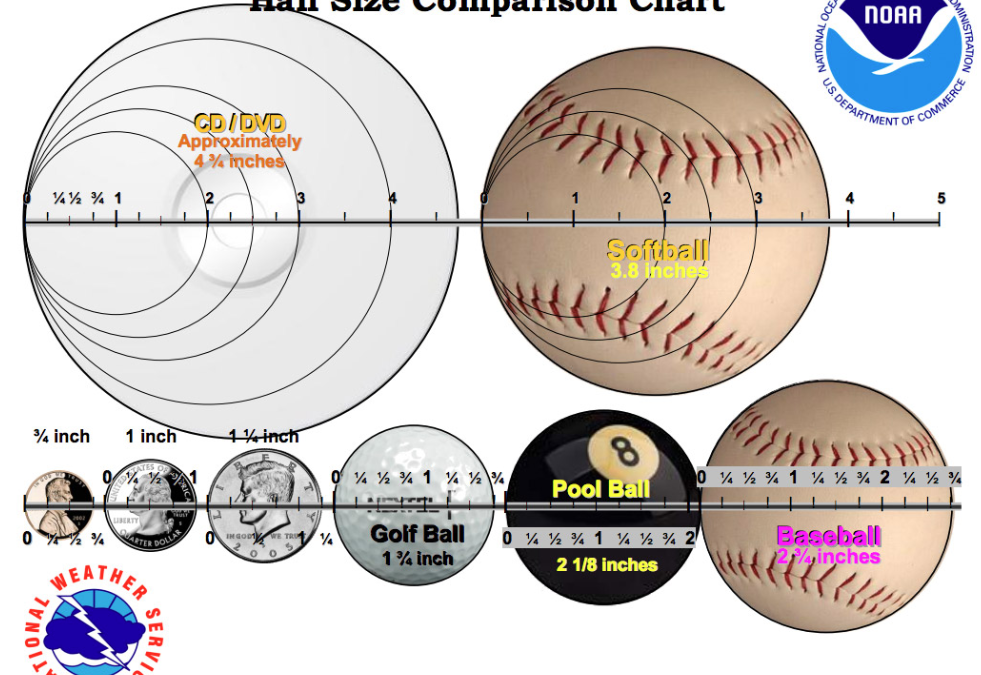
| Max Hail | Diameter (inches) + MESH radar estimate + SPC reports |
| Data Sources | NOAA/NCEI, NWS ASOS/AWOS, SPC Storm Reports, WSR-88D radar |
| Confidence | High when 2 or more independent sources agree; Medium with partial gaps; Low if model-dependent |
Why Weather-Only Evidence Wins Property Cases
Property damage litigation without injury shifts the burden entirely to physical evidence and atmospheric data. A certified meteorologist witness establishes three critical facts:
- Causation: Did wind, hail, or rain cause the damage, or was it pre-existing wear?
- Timing: When did the event occur relative to the policy period or prior inspections?
- Intensity: Did conditions exceed code thresholds (ASCE 7-22 wind zones, IRC hail ratings) or deductible triggers?
Courts admit meteorology expert witness testimony under Daubert (federal) and Frye (state) standards when the expert uses peer-reviewed methods and NOAA-archived datasets. Opposing counsel rarely challenges qualified meteorologist testimony because the data trail (station IDs, timestamps, radar imagery) is independently verifiable.
Forensic meteorology expert witness services for property damage litigation
Regional Variations Matter
Gulf Coast claims often hinge on distinguishing wind from storm surge in hurricane cases. Mountain West disputes turn on orographic effects and microclimate variability. Great Plains hail claims require radar MESH verification against ground truth. A single national expert witness must account for these differences or risk Daubert exclusion for lack of regional experience.
Evidence and Methods: How Forensic Meteorologists Reconstruct Property Damage Events
Surface Observations: ASOS, AWOS, and Cooperative Networks
The ASOS program, a joint effort of the NWS, FAA, and Department of Defense, operates more than 900 stations across the United States. The National Weather Service also maintains approximately 8,700 cooperative observer (COOP) stations. ASOS collects 1-minute observations (archived by NCEI) and generates operational METAR reports hourly, with special observations issued when weather changes rapidly. COOP stations provide daily rainfall totals and temperature extremes.
Key Facts for Court
- ASOS stations record peak wind gusts with timestamps to the second (UTC).
- COOP rain gauges measure 24-hour precipitation totals (7 AM local).
- Mesonet stations (state-operated) fill gaps between NWS sites, especially in Texas, Oklahoma, and the Southeast.
A forensic meteorology expert pulls raw METAR observations from NCEI archives, noting station ID (e.g., KMEM for Memphis), observation time (UTC), and any quality-control flags. If a station was offline or suspect, the report states this limitation explicitly.
Radar Analysis: WSR-88D Dual-Polarization
NOAA’s NEXRAD radar network (WSR-88D) provides base reflectivity, velocity, and dual-pol products every 4 to 6 minutes in precipitation mode and every 10 minutes in clear air mode, depending on the active Volume Coverage Pattern (VCP). For hail claims, Maximum Expected Size of Hail (MESH) algorithms estimate hailstone diameter. For wind damage, velocity data reveal mesocyclone signatures and microbursts.
Court-Admissible Standards
- MESH values of 1.0 inch or greater correlate with surface hail reports 70% of the time.
- Velocity couplets (inbound/outbound winds) indicate rotation; horizontal shear indicates straight-line winds.
- Radar altitude matters: at the lowest elevation angle (0.5 degrees), the beam center is approximately 3,500 ft AGL at 50 statute miles (and approximately 4,400 ft AGL at 50 nautical miles), reducing confidence in surface wind and hail verification at distance.
Storm Prediction Center (SPC) Reports
The SPC archives public storm reports (wind, hail, tornado) from trained spotters and NWS offices. Each report includes lat/lon, time (local + UTC), magnitude (e.g., “golf ball hail”), and narrative. Forensic meteorologists cross-reference SPC reports with radar and surface obs to establish consistency.
Limitations: SPC reports are unverified eyewitness accounts. A report of “60 mph wind” may come from a trained spotter or a panicked homeowner. Courts weigh radar and ASOS data more heavily than isolated SPC entries.
Numerical Weather Prediction and Reanalysis Data (Corroboration Only)
High-resolution numerical weather prediction (NWP) models such as HRRR and NAM simulate atmospheric conditions at 3-km resolution. True reanalysis datasets (e.g., ERA5, NARR) provide retrospective atmospheric reconstructions but at coarser resolution. Both model types serve as corroboration only, not primary evidence. A meteorologist expert witness uses model output to explain synoptic setup (cold front, low pressure) but never cites modeled wind speeds as the primary evidence of damage-level gusts.
Mechanism and Attribution: Proving Causation in Property Disputes
Synoptic and Mesoscale Setup
A forensic weather consultant reconstructs the atmospheric environment:
- Cold fronts generate squall lines with embedded downbursts.
- Supercells produce large hail and tornadoes.
- Extratropical cyclones drive multi-day wind events and coastal flooding.
The expert’s report includes a synoptic chart (e.g., NOAA WPC surface analysis) showing pressure systems, fronts, and isobars at the time of loss. This chart establishes plausibility: “A 995-mb low over Kansas on March 15, 2025, at 18Z drove southwesterly flow and lifted a warm front across Missouri, consistent with the observed thunderstorm complex.”
Daubert and Frye Standards for Admissibility
Federal courts apply Daubert v. Merrell Dow Pharmaceuticals (1993), requiring:
- Testability: Methods must be falsifiable.
- Peer review and publication: Methods should have been published and subjected to peer scrutiny.
- Error rates: Known uncertainty in datasets and methods (e.g., plus or minus 2 knots for ASOS wind).
- General acceptance: Acceptance in the relevant scientific community (AMS, NWA).
The court also evaluates relevance: whether the expert’s analysis fits the facts of the case.
State courts may apply Frye (general acceptance test) or Daubert-like standards. A weather litigation expert must cite peer-reviewed literature (e.g., AMS journals) showing that radar-based hail sizing or wind gust estimation methods are scientifically valid.
Court Admissibility: Meteorologist expert witness testimony using NOAA/NCEI data and peer-reviewed methods is rarely excluded under Daubert or Frye standards when the expert holds recognized credentials and transparently discloses data limitations.
Limitations: What Weather Evidence Cannot Prove
Even with perfect data, forensic meteorology has bounds:
- Instrumentation gaps: Rural areas may lack ASOS or mesonet coverage. The nearest station could be 20+ miles away, introducing spatial uncertainty.
- Representativeness: A wind gust measured at an airport may not reflect conditions at a residential roof 5 miles inland. Terrain, buildings, and vegetation alter local flow.
- Pre-existing damage: Weather data proves what happened atmospherically but cannot distinguish fresh hail dents from months-old impact marks. A roofing engineer or materials expert must pair with the meteorologist.
- Model limitations: Forecast models have approximately 3 km resolution. They miss individual thunderstorm cells and microbursts smaller than 1 km in size. Reanalysis datasets provide better historical coverage but at coarser spatial resolution.
- Radar altitude: NEXRAD beams rise with distance. At 50 miles, the lowest scan is approximately 3,500 feet above ground. Low-level wind shear or small hail may go undetected.
A credible forensic meteorology expert states these limitations in the report and assigns a confidence bin (High, Medium, Low) based on data quality and coverage.
Practical Implications: How Weather Evidence Decides Real Disputes
Insurance Deductible Triggers
Many homeowners policies impose a higher deductible (e.g., 2% of dwelling value) for wind or hail damage. Proving wind gusts exceeded 50 mph or hail exceeded 1 inch triggers the deductible clause. A meteorologist expert witness provides the court with:
- ASOS peak gust (mph, knots) with timestamp
- Radar MESH hail size estimate
- Distance from observation point to loss location
- Confidence assessment
If no ASOS station is within 10 miles, the expert may interpolate using surrounding stations or radar velocity data, clearly stating the method and uncertainty range (e.g., “estimated 45 to 55 mph at the loss site, Medium confidence”).
Roof Age and Pre-Existing Wear
Insurers deny claims arguing roof damage predates the storm. A certified meteorologist witness reviews prior weather events:
- Pull NCEI data for the property ZIP code over the past 5 years.
- Identify all hail events of 1 inch or greater and wind events of 50 mph or greater.
- Cross-reference SPC reports and radar archives.
If no significant weather occurred in the 24 months before the claim, the meteorologist’s testimony supports a “new damage” conclusion. Conversely, if three hailstorms hit in the prior year, the expert quantifies cumulative exposure, helping the court apportion causation.
Subrogation: Who Pays?
Subrogation cases pit one insurer against another (or a contractor, roofer, etc.). The meteorology court testimony answers: “Did the storm cause the damage, or did poor workmanship?” If a roof failed in 40-mph winds, well below design standards (ASCE 7-22 prescribes 115 mph in most interior CONUS locations for Risk Category II structures, increasing to 170+ mph in hurricane-prone coastal zones), the expert’s report suggests defective installation, not act of God.
Cost-Benefit: A $3,000 expert witness fee can recover or defend a $500,000 claim. Attorneys hire meteorologist expert witness services early in discovery to avoid surprise weather facts at trial.
Regional Code Variations
| Region | Key Weather and Code Factors |
|---|---|
| Gulf Coast (FL, LA, TX Gulf) | ASCE 7-22 wind speeds 130 to 180 mph; hurricane deductibles 2 to 5%; focus on wind vs. storm surge |
| Great Plains (OK, KS, NE) | Frequent hail; MESH radar critical; IRC hail-impact standards (UL 2218 Class 4 shingles) |
| Mountain West (CO, UT, WY) | Orographic snow, ice dams, wind channeling; fewer ASOS stations; model uncertainty higher |
| Northeast (New England, Mid-Atlantic) | Nor’easter wind + snow loading; forensic analysis of multi-day events; RMS cat models for insured loss estimates |
A forensic weather consultant must know regional exposure and code nuances or risk Daubert challenge for lack of specialized knowledge.
Frequently Asked Questions About Weather-Evidence-Only Cases
- How much does a forensic meteorologist cost for a property damage case?
- Typical rates range $200 to $500 per hour, with initial retainers of $2,000 to $5,000. A straightforward report (single event, good data coverage) takes 10 to 20 hours. Complex multi-day events or sparse data can require 40+ hours. Deposition and trial testimony add $2,000 to $5,000 per day.
- Can a meteorologist determine roof age from weather data alone?
- No. Weather data proves what storms occurred and their intensity. A roofing engineer or materials scientist must examine the roof to date wear patterns, granule loss, and impact marks. The meteorologist expert witness correlates observed damage with known weather events, establishing plausibility but not definitive age.
- What if the nearest weather station is 30 miles from my property?
- Distance reduces confidence. A certified meteorologist witness will interpolate using multiple stations, radar data, and topographic maps. The report will state: “Estimated conditions at loss site: 50 to 60 mph winds, Medium confidence due to 30-mile station gap.” Courts accept this if the method is explained and limitations disclosed.
- Do I need a meteorologist if my claim is under $50,000?
- Cost-benefit depends on dispute complexity. If the insurer denies based on “no storm on that date,” a $3,000 expert report with NCEI data and radar imagery can flip the claim. If the issue is roof age or workmanship, pair the meteorologist with a roofing engineer for maximum impact.
- How quickly can a forensic meteorologist deliver a report?
- Most experts deliver initial findings in 5 to 10 business days for straightforward cases. Complex analyses (multi-day events, sparse data, multiple locations) may take 3 to 4 weeks. Rush service (48-hour turnaround) is available at premium rates ($500 to $750/hr) for imminent trial deadlines.
- Will opposing counsel challenge my meteorologist’s credentials?
- When the expert uses NOAA/NCEI data and follows peer-reviewed methods, challenges are rare. Daubert motions target unqualified experts or junk science. A forensic meteorologist with 10+ years experience and recognized credentials passes Daubert scrutiny in the vast majority of cases.
Three Keys to Winning Weather-Only Property Disputes
- Data Wins: NOAA ASOS/AWOS observations, NEXRAD radar, and SPC reports provide court-admissible proof of wind, hail, and rain intensity with timestamps and station IDs.
- Expert Credentials Matter: Qualified meteorologists with recognized professional credentials achieve high court admissibility under Daubert/Frye standards, while uncredentialed “weather experts” face exclusion motions.
- Regional Context Required: Gulf Coast hurricane deductibles, Great Plains hail-impact codes (UL 2218), and Mountain West orographic effects demand specialized regional knowledge. Generic national analysis fails under cross-examination.
Need expert weather analysis for your property damage case?
Technical Appendix: Methods, Datasets, and Quality Control
Data Retrieval and Archival Sources
All surface observations come from NOAA National Centers for Environmental Information (NCEI) archives. Specific datasets:
- ISD (Integrated Surface Database): Hourly and sub-hourly ASOS/AWOS observations; includes METAR codes, wind gust, temperature, pressure, visibility.
- DSI-3505 (COOP): Daily precipitation and temperature extremes from cooperative observer network.
- Mesonet APIs: State-operated networks (e.g., Oklahoma Mesonet, West Texas Mesonet) via real-time and archived APIs.
Radar data (Level II base data) retrieved from NOAA NCEI Big Data Program (AWS S3 bucket) or NOAA CLASS archive. Processing uses NEXRAD Radar Operations Center (ROC) algorithms (PPS, NSSL) for reflectivity, velocity, and dual-pol products. MESH hail size computed per Witt et al. (1998) algorithm.
Station Selection and Spatial Interpolation
Primary station selection criteria:
| Distance from Loss Location | Confidence Level | Notes |
|---|---|---|
| Less than 10 miles | High | Direct observation applicable |
| 10 to 25 miles | Medium | Interpolation required |
| Greater than 25 miles | Low | Flag as limitation |
Interpolation method: Inverse-distance weighting (IDW) for wind/temperature; Thiessen polygons for precipitation if COOP network is dense. Model output (HRRR, NAM) used for mesoscale context only, not as primary evidence.
Quality Control and Uncertainty Quantification
ASOS wind observations: manufacturer specification of plus or minus 2 knots (approximately 2.3 mph) or plus or minus 3%, whichever is greater, for sustained wind speeds up to 125 knots. Real-world field studies (NOAA/NWS ASOS Performance Reports) show plus or minus 10% error in complex terrain.
Radar MESH: Verification studies show MESH of 1.0 inch or greater corresponds to surface hail reports 70% of the time; MESH of 2.0 inches or greater shows approximately 85% correspondence. Overestimation occurs in dry air (sublimation); underestimation in high ZDR gradient zones.
Uncertainty Bins
- High confidence: Two or more independent sources (ASOS + radar + SPC) within 10 miles; instruments operational; no siting concerns.
- Medium confidence: Single ASOS or partial radar coverage; distance 10 to 25 miles; minor gaps or siting issues.
- Low confidence: Model-dependent estimates; station greater than 25 miles; radar beam greater than 5,000 ft AGL; significant data gaps.
Chain of Custody and Reproducibility
All data retrieved via documented API calls or manual NCEI queries. Retrieval timestamps (UTC) logged. Example:
Station: KMEM (Memphis International Airport)
Retrieval time: 2025-02-05 14:32Z
Observation window: 2025-01-15 12:00Z to 2025-01-16 12:00Z
Tool: Python 3.11.7, noaa-sdk library v0.1.21
This chain-of-custody footnote allows opposing counsel or peer reviewers to reproduce the analysis exactly. It also satisfies Federal Rules of Evidence 901 (authentication) and 902(4) (certified copies of public records).