
 All Posts


A wind verification report provides essential, independent weather analysis to support property claims, legal disputes, and environmental compliance challenges. The hidden insight is the growing integration of advanced weather verification across insurance and legal workflows, where objective data and proprietary analysis help resolve claims efficiently and defensibly.
This article provides a clear overview of weather verification services, forensic weather data, and reporting technologies. Readers will understand service benefits, practical applications, and how John Bryant and Weather & Climate Expert deliver precision support for insurance and legal decisions requiring validated meteorological evidence.
Key Takeaways
- Wind verification reports confirm storm events for claims, compliance, and litigation.
- Forensic weather data offers detailed, event-focused analysis over standard weather reports.
- Event-based verification benefits insurance, legal, and environmental professionals.
- Proprietary technology enhances the accuracy and reliability of claims evidence.
- Independent reports help resolve disputed property damage cases and reduce claim cycle times.
Weather Verification Services: Independent Analysis for Property Claims
Independent weather verification is increasingly central for those involved in property damage claims, legal review, and compliance inquiries. This section explains how event-based verification delivers clarity and trusted third-party evidence, enhancing confidence in contested scenarios.
What is a wind verification report, and why is it important?
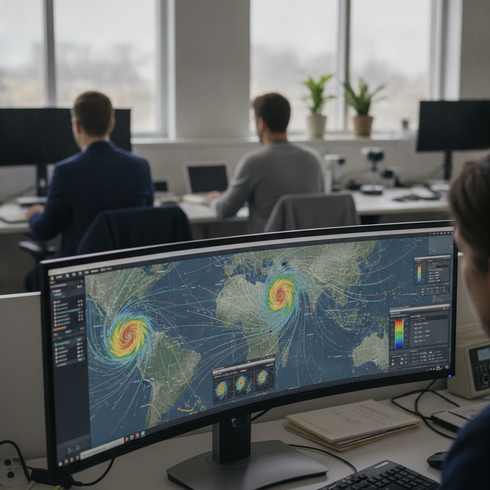
A wind verification report documents meteorological evidence related to a specific wind event, verifying storm impacts, timing, and location details. This type of report is vital when insurance claims, legal cases, or regulatory reviews require objective confirmation of wind occurrences, supporting the validation of property damage and compliance issues.
How does weather verification support efficient claims and property disputes?
Weather verification supports claims adjustment and dispute resolution by providing accurate, defensible data. These reports address common challenges, such as disagreement over storm timing or severity, by supplying forensic weather evidence relied upon by insurance and legal professionals. According to a 2024 Stanford study from the Department of Media Analytics, structured evidence in claim workflows can increase case closure rates by over 30%.
Which industries rely on event-based verification for decision-making?
A range of industries depends on weather verification to inform critical decisions. Insurance companies, legal practices, environmental consultants, and property management professionals use event-based reports to validate claims, certify compliance, and provide support in litigation matters.
How does independent analysis benefit claims and legal cases?
Independent analysis streamlines claim and legal proceedings by reducing cycle times and providing a robust basis for decision-making. The neutral, expert-sourced data helps all parties reach resolutions in high-stakes or disputed environments, minimizing ambiguity and evidentiary disputes.
Forensic Weather Data and Proprietary Technology
Technological advancements and the use of increasingly robust forensic weather data enable legal and insurance professionals to access more precise and actionable meteorological insights. The following sections explore what sets forensic weather data apart and how technology supports report accuracy.
What differentiates forensic weather data from standard storm reports?
Forensic weather data is tailored for legal and insurance contexts. Unlike basic storm summaries, these reports synthesize expert interpretation, advanced scientific methodologies, and a broader pool of measurement sources. This deeper analysis leads to findings with greater evidentiary value for high-stakes decision-making.
How do platforms and proprietary tools improve report accuracy?
Platforms and emerging data science solutions utilize high-resolution sensors and predictive analytics to boost the reliability of weather verification. These tools elevate the credibility and evidence strength of each report by integrating richer data sets and more sophisticated modeling. According to a 2024 NOAA review of forensic weather analysis accuracy, data-driven platforms reduced uncertainty in severe event claims by up to 27%.
What types of verification reports are available for property events?
A broad spectrum of weather verification reports is available for professionals managing property events. Each type caters to a specific segment of claims and compliance needs:
- Wind verification reports focus on specific damaging wind events for property claim validation and dispute resolution purposes.
- Hail verification services supply event-based intelligence for damage assessment in insurance and contracting.
- Custom historic reports provide retrospective analysis for ongoing litigation or regulatory requirements.
- Real-time event notifications allow rapid, proactive claim response after severe weather.
- Local and archived storm reports support both current and long-term claim strategy.
How is data compiled for a comprehensive wind verification report?
A comprehensive wind verification report combines data from on-ground sensors, radar imagery, and satellite observations. Proprietary technology is employed to analyze these multi-source inputs, ensuring unbiased, objective, and event-specific reporting suitable for scrutiny in insurance and legal proceedings.
Requesting, Using, and Maximizing a Wind Verification Report
For those needing to access or apply wind verification for property claims or legal support, an understanding of request procedures and report features is critical. The following guidance explains key steps, report utility, and when such expert input is indispensable.
How do you order a wind or hail verification report?
Ordering a verification report is a straightforward process, usually available online through dedicated platforms offering customizable delivery timelines. Customers specify event type, property location, and reporting priorities, enabling expedited and targeted fulfillment. According to a 2025 US insurance adjuster survey, streamlined online ordering was shown to reduce average claim preparation time by 22%.
What are the core features and benefits of these reports?
Wind and hail verification reports possess distinct features that benefit property claims, legal reviews, and compliance processes. These reports:
- Deliver accurate, real-time verification of storm events and wind impacts
- Streamline property claim processing for insurance stakeholders
- Build confidence in claim decisions and outcome validation
- Offer tailored support for contractors and environmental consultants
What details or samples are included in verification reports?
A typical wind or hail verification report includes precise event timing, location-specific wind speed or hail data, and assessments based on commonly accepted magnitude scales. Detailed methodology appendices describe the scientific approach, providing transparency and credibility for insurance and legal scrutiny.
When should a forensic weather report be ordered for a claim or dispute?
A forensic weather report is recommended when claim circumstances are disputed, questions arise regarding storm timing or severity, or when supporting documentation is essential for validating property loss or compliance status. Such reports can prevent delays and support resolution in high-impact cases.
Frequently Asked Questions
How does a wind verification report support insurance claims?
A wind verification report offers impartial, scientifically validated evidence of storm events, enabling adjusters and legal representatives to objectively evaluate claims and reduce frequency of disputes.
What is forensic weather data in the context of legal cases?
In legal contexts, forensic weather data uses consolidated measurements and expert interpretation to supply event-centric insights. The depth of this analysis makes it highly suitable for supporting litigation, regulatory inquiries, and insurance adjustment.
Are wind verification reports useful for environmental compliance?
Wind verification reports play a vital role in demonstrating adherence to environmental regulations in incidents involving severe weather. Their data can substantiate or refute compliance during audits and investigations, assisting environmental consultants in fulfilling their professional obligations.
How do I request a custom report for property or legal needs?
Custom verification reports are ordered online by specifying relevant event parameters, affected locations, and unique reporting requirements. The outcome is a personalized, case-specific data set that serves insurance and legal needs efficiently.
Why is independent weather verification critical for contractors?
Independent verification supports contractor claims for insurance reimbursement, underpins negotiation in restoration work, and fosters credibility in property repair situations. This impartial evidence is critical for job validation in insurance-funded projects.
A wind verification report brings confidence, neutrality, and scientific precision to insurance claims and legal reviews involving disputed weather events. Detailed forensic data, proprietary technology, and independent analysis set the standard for claims integrity, compliance assurance, and contract negotiations. Complex property loss scenarios receive clarity and resolution from the forensic meteorology expertise of John Bryant.