 All Posts


Key Takeaways
- Meteorological evidence can clarify weather-related disputes: Historical weather records and scientific analysis can help establish the conditions surrounding an incident.
- Data quality matters: Reliable conclusions depend on suitable sources, accurate timelines, and careful evaluation of observation coverage.
- Local conditions require careful assessment: Regional weather reports may not reflect the exact conditions at a particular property or accident site.
- Models and remote sensing have limitations: Radar, satellite imagery, and numerical models provide valuable information but should be interpreted in context.
- Weather does not automatically establish liability: Causation and legal responsibility require consideration of the full evidence and applicable legal standards.
- Clear reporting strengthens scientific communication: Transparent methods, documented findings, and explicit limitations help legal professionals evaluate expert opinions.
Nashville Expert Meteorological Analysis for Legal Cases
Meteorological analysis can play an important role in legal cases involving severe weather, property damage, personal injuries, insurance disputes, and environmental conditions. By examining reliable weather observations, radar data, satellite imagery, and historical records, meteorological experts can help establish what atmospheric conditions existed at a particular time and place.
For attorneys, insurance professionals, and other parties involved in weather-related disputes, understanding the scientific evidence behind an incident can help clarify timelines, evaluate competing explanations, and assess whether weather conditions may have contributed to the outcome.
In Nashville, Tennessee, changing weather conditions—including severe thunderstorms, heavy rainfall, tornadoes, winter precipitation, and periods of extreme heat—can create complex questions in legal and insurance matters. A structured meteorological investigation can help address these questions using documented evidence and established scientific methods.
Understanding Meteorological Analysis in Legal Cases
Meteorological analysis involves examining atmospheric observations and scientific data to reconstruct or evaluate weather conditions. In legal cases, this process often focuses on a specific event, location, and time frame.
Rather than relying solely on general weather summaries, an expert evaluates the available evidence to determine which conditions were present, how they developed, and whether they are relevant to the issues being disputed.
For example, a weather-related investigation may examine whether heavy rainfall occurred before a property flooded, whether freezing conditions contributed to an icy walking surface, or whether wind speeds were consistent with reported storm damage.
The conclusions depend on the quality and coverage of the available data, the physical characteristics of the event, and the limitations of the scientific methods used.
How Meteorology and Law Intersect
Meteorological evidence may be relevant when a legal dispute depends on environmental conditions at a particular time. Attorneys may need to evaluate whether a storm affected a property, whether weather contributed to an accident, or whether environmental conditions influenced an alleged loss.
A qualified meteorological expert can analyze observations and explain their significance in terms that legal professionals, judges, and juries can understand.
Common applications include:
- Personal injury cases: Evaluating temperature, precipitation, freezing conditions, and other weather factors relevant to an accident.
- Property damage claims: Examining wind, hail, rainfall, and other atmospheric conditions associated with reported damage.
- Insurance disputes: Assessing whether documented weather conditions are consistent with the timing and reported circumstances of a claim.
- Construction and premises liability cases: Investigating weather conditions that may have affected surfaces, structures, drainage, or site safety.
- Environmental and infrastructure matters: Reviewing meteorological conditions relevant to pollutant dispersion, stormwater, or other environmental questions.
Meteorological findings can support or challenge a proposed explanation, but weather evidence alone does not automatically establish negligence, causation, or legal liability. Those conclusions depend on the complete evidence and the applicable legal standards.
For cases requiring specialized scientific testimony, a meteorology expert witness can help interpret weather records and explain the significance of the findings.
Why Accurate Weather Data Matters in Legal Proceedings
Reliable weather data is essential to a defensible meteorological investigation. The objective is to identify the best available evidence for the location and period under review, evaluate its limitations, and explain how those limitations affect the conclusions.
Depending on the case, relevant variables may include:
- Air temperature and dew point
- Precipitation amounts and timing
- Wind speed, direction, and gusts
- Snow, ice, and freezing conditions
- Atmospheric pressure and storm development
- Radar-indicated precipitation and storm movement
- Satellite observations and other remotely sensed information
Data sources may include official surface weather stations, National Weather Service records, weather radar, satellite products, archived observations, and other documented datasets.
The choice of source matters. A weather station several miles from an incident may not capture the exact conditions at the site, particularly during localized thunderstorms, isolated hail events, or rapidly changing precipitation. Similarly, radar estimates and satellite observations provide valuable information but do not necessarily measure every surface condition directly.
A sound analysis considers these differences instead of treating all datasets as interchangeable.
The Role of Weather Models and Remote Sensing
Numerical weather prediction models use mathematical representations of atmospheric processes to simulate and forecast weather. They can help explain storm development, evaluate broader atmospheric conditions, or provide context when direct observations are limited.
However, a model simulation is not equivalent to a direct observation of what occurred at a specific property. Model resolution, initial conditions, physical assumptions, and local terrain can affect the results.
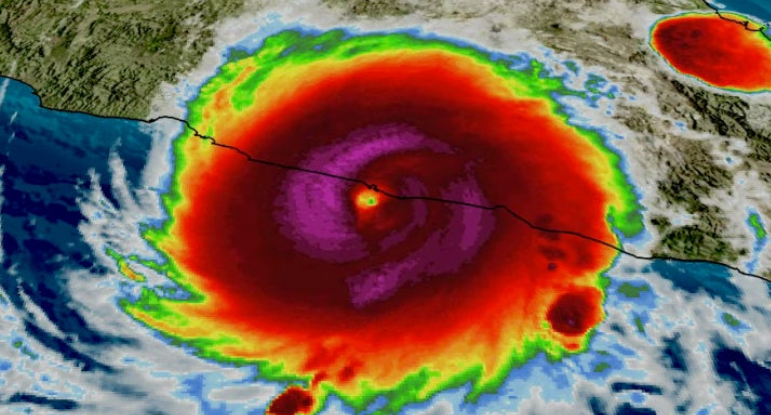
Weather radar can help identify precipitation patterns, storm movement, and certain storm characteristics. Satellite imagery can reveal cloud development and broader atmospheric patterns. Neither source, on its own, necessarily establishes the exact wind speed, hail size, or ground-level conditions at an individual location.
For forensic purposes, these tools are most useful when interpreted alongside other available evidence, including surface observations, photographs, damage documentation, and event-specific records.
The Process of Conducting Meteorological Analysis
A systematic investigation helps ensure that conclusions are traceable to the available evidence and that uncertainties are clearly documented.
1. Define the Event and Relevant Time Frame
The investigation begins by identifying the incident location, the date and time of interest, and the specific questions that need to be answered.
For example, an expert may need to determine whether freezing temperatures occurred overnight, whether rainfall preceded a reported flood, or whether a severe thunderstorm moved through an area during a particular period.
Accurate timestamps are important. Records may use different time zones or reporting conventions, so the analyst must establish a consistent timeline before comparing observations.
2. Collect and Evaluate Weather Records
The expert identifies appropriate data sources and evaluates their relevance, reliability, spatial coverage, and temporal resolution.
Depending on the case, this may involve reviewing:
- Official weather station observations and archived reports
- Weather radar imagery and precipitation estimates
- Satellite imagery and storm-tracking information
- Historical weather databases
- Forecast model output, where scientifically appropriate
- Photographs, maintenance records, incident reports, and other corroborating evidence
Additional sources may help address gaps in the record, but they should not be used to imply a level of precision that the evidence cannot support.
3. Reconstruct the Weather Timeline
Once the relevant information has been collected, the meteorologist compares observations and other evidence to reconstruct the sequence of atmospheric conditions.
This may involve identifying when precipitation began, tracking the movement of a storm, evaluating temperature changes, or examining whether the available observations support reports of strong winds.
The reconstruction should distinguish between directly observed conditions, estimates derived from scientific methods, and conclusions that remain uncertain.
This distinction is especially important when the closest weather station is not located at the incident site or when the event occurred between routine observation times.
4. Evaluate the Evidence and Its Limitations
Meteorological analysis requires more than collecting data. The expert must determine whether the evidence supports the question being investigated.
For instance, regional reports of freezing temperatures do not necessarily establish that a specific sidewalk was icy. Likewise, evidence of strong winds in an area does not automatically prove the wind speed at an individual structure.
A careful evaluation considers the distance between observation sites, measurement methods, timing, local conditions, and alternative explanations.
5. Prepare Findings for Legal Review
The final analysis may include a written report, data tables, weather maps, timelines, radar imagery, and explanations of the methods used.
When expert testimony is requested, the meteorologist may explain the relevant atmospheric processes, the reliability of the evidence, and the limitations of the conclusions.
The purpose is to present scientific findings clearly and objectively. Whether the testimony is admissible depends on the applicable rules and the court’s evaluation of the evidence and expert qualifications.
Nashville’s Weather Patterns and Their Relevance to Legal Cases
Nashville’s climate includes hot, humid summers, variable winter conditions, and precipitation throughout the year. The region can experience thunderstorms, heavy rainfall, damaging winds, tornadoes, occasional snow and ice, and periods of extreme heat.
These conditions can create different investigative challenges depending on the type of incident.
Severe Thunderstorms, Tornadoes, and Wind Damage
Severe thunderstorms can produce damaging straight-line winds, hail, intense rainfall, and, in some cases, tornadoes. These hazards can damage roofs, trees, vehicles, buildings, and utility infrastructure.
A meteorological investigation may examine radar imagery, official storm reports, nearby observations, wind records, and the timing of the reported damage.
It is important to distinguish among possible causes. Straight-line winds and tornadoes can produce different damage patterns, but damage appearance alone may not establish the precise wind speed or conclusively identify the storm mechanism. A reliable assessment considers the full evidence and the limitations of each source.
Heavy Rainfall and Flooding
Heavy rainfall can overwhelm drainage systems, increase runoff, and contribute to flash flooding. In urban areas, paved surfaces and drainage infrastructure can influence how quickly water accumulates.
For a flooding-related dispute, meteorological analysis may examine rainfall intensity, storm movement, antecedent rainfall, and the timing of precipitation relative to the reported damage.
Rainfall data can help establish the atmospheric component of a flooding event, but determining the cause and extent of flooding may also require hydrological, drainage, engineering, or site-specific evidence.
Winter Weather, Freezing Rain, and Slippery Surfaces
Although Nashville does not experience consistently severe winters, freezing temperatures, snow, sleet, and freezing rain can create hazardous conditions.
In an injury or premises liability case, the relevant questions may include whether temperatures were conducive to freezing, whether precipitation occurred, and whether the timing supports the reported development of ice.
Air temperature alone does not prove that ice formed on a particular surface. Surface temperature, exposure to sunlight, drainage, residual moisture, treatment measures, and local conditions can also matter.
A forensic meteorological assessment can help establish the broader weather context and identify what the available evidence can—and cannot—demonstrate.
Heat and Environmental Conditions
Periods of extreme heat may be relevant to workplace incidents, outdoor activities, equipment performance, and other disputes involving environmental exposure.
An investigation may review temperature, humidity, wind, cloud cover, and other variables relevant to the question being examined.
Where the issue involves human heat stress, workplace safety, or environmental exposure, meteorological findings may need to be considered alongside medical, occupational, or environmental expertise.
For matters involving environmental requirements, Nashville environmental compliance consulting may also be relevant.
Challenges in Meteorological Analysis for Legal Cases
Incomplete or Inconsistent Weather Records
Historical observations may be unavailable at the exact location of an incident. Weather stations have different reporting intervals, and localized events may occur between measurements or outside a station’s immediate area.
Radar estimates, nearby station records, satellite imagery, and other sources can help fill gaps, but each has limitations. The analyst should explain how the available evidence supports the reconstruction and where uncertainty remains.
Local Variations in Weather Conditions
Weather can vary considerably over short distances. A thunderstorm may produce heavy rainfall or hail in one neighborhood while nearby locations experience substantially different conditions.
For this reason, an observation from a distant station should not automatically be treated as representative of an incident site. The relevance of each observation depends on its distance, timing, surrounding conditions, and the type of weather event.
Distinguishing Correlation From Causation
The occurrence of severe weather near the time of an incident does not, by itself, prove that weather caused the damage or injury.
An expert must assess whether the documented conditions are consistent with the proposed explanation and whether other factors may also be involved. In some cases, meteorological evidence can support a conclusion; in others, it may be insufficient to resolve causation without additional engineering, hydrological, medical, or physical evidence.
Communicating Scientific Uncertainty
Legal proceedings often require clear answers, but scientific evidence does not always support absolute certainty. Measurement limitations, incomplete records, and localized weather effects may constrain what can be determined.
A credible report explains the methods used, the evidence supporting each conclusion, the assumptions involved, and any material limitations. Transparency helps legal professionals assess the strength of the findings without overstating their significance.
The Future of Meteorological Analysis in Legal Proceedings
Advances in weather observation, computing, data archiving, and analytical techniques continue to improve the resources available to forensic meteorologists.
Improved Data Access and Analytical Tools
Higher-resolution radar products, expanded observation networks, improved historical archives, and more capable analytical software can help experts examine weather events in greater detail.
These developments may support more detailed event timelines and comparisons across multiple datasets. Nevertheless, improved technology does not eliminate the need for sound methodology, appropriate source selection, and careful interpretation.
Responsible Use of Models and Emerging Technologies
Advanced modeling tools can help evaluate atmospheric processes and explore plausible scenarios when direct measurements are limited. Their usefulness depends on the quality of the input data, the suitability of the model for the question, and the degree to which results can be validated against observations.
For legal applications, modeled estimates should be distinguished from measured values, and uncertainty should be communicated clearly.
Continued Importance of Qualified Expert Interpretation
As weather datasets become more extensive, the ability to identify relevant evidence and explain its limitations remains essential. Attorneys and insurers need analysis that addresses the specific facts of a dispute rather than generic descriptions of regional weather.
A qualified expert can help connect atmospheric science to the questions under review while remaining within the limits of the available evidence.
Secure Expert Meteorological Insight for Your Legal Needs
Weather-related disputes often require a detailed understanding of the conditions that existed before, during, and after an incident. John Bryant of Weather and Climate Expert provides meteorological and environmental consulting services to support attorneys, insurers, and other professionals evaluating weather-related questions.
With experience in meteorological analysis and environmental consulting, John can help assess relevant weather records, explain atmospheric conditions, and provide scientific insight tailored to the needs of a case.
If you need assistance with a weather-related legal matter in Nashville, explore Nashville weather expert witness services or contact Weather and Climate Expert to discuss your specific requirements.
Frequently Asked Questions
1. What is meteorological analysis in a legal case?
Meteorological analysis is the scientific evaluation of weather data to determine the atmospheric conditions relevant to an incident. It may involve historical observations, radar imagery, satellite data, weather models, and other evidence to reconstruct an event timeline or evaluate a weather-related claim.
2. When might a meteorology expert witness be needed?
A meteorology expert witness may be useful in cases involving storm damage, wind and hail claims, flooding, weather-related accidents, icy surfaces, or other disputes in which atmospheric conditions are material to the questions being considered.
3. What weather data can be used as evidence?
Relevant sources may include official weather station observations, archived reports, radar imagery, satellite products, precipitation records, and other documented meteorological datasets. The appropriate sources depend on the incident, its location, and the time period being investigated.
4. Can historical weather data prove that weather caused property damage?
Historical weather data can help establish whether relevant conditions occurred and whether they are consistent with a proposed explanation for the damage. However, weather records alone may not establish the exact cause of property damage. The assessment may also require photographs, inspection findings, engineering evidence, and other case-specific information.
5. How does meteorological analysis help with slip-and-fall cases?
A meteorologist can evaluate recorded temperatures, precipitation timing, freezing conditions, and other relevant weather factors. This evidence may help reconstruct the environmental conditions surrounding an incident, although it may not independently establish whether a specific surface was icy or who was legally responsible.
6. How reliable is historical weather data for legal proceedings?
Reliability depends on the source, measurement method, location, reporting interval, and completeness of the records. A qualified analyst evaluates these factors, compares appropriate sources, and explains any limitations that could affect the conclusions.
7. Can weather radar determine the exact conditions at a specific property?
Not necessarily. Radar provides information about precipitation and storm characteristics over an area, but it does not directly measure every surface-level condition at an individual property. Radar evidence is generally more informative when combined with surface observations and other relevant records.
8. Why hire a meteorological expert for a Nashville legal matter?
Nashville can experience severe thunderstorms, heavy rainfall, damaging winds, winter precipitation, and extreme heat. A meteorological expert can evaluate the available evidence, reconstruct relevant weather conditions, and explain the scientific findings in the context of the legal questions involved.
9. What should attorneys provide when requesting a meteorological analysis?
Helpful materials include the incident location, date and time, a description of the questions to be addressed, relevant photographs, incident reports, property records, and any existing weather documentation. The expert can then identify suitable data sources and determine whether the available evidence is sufficient to address the questions.
10. Does a meteorological expert determine legal liability?
No. A meteorological expert provides scientific analysis and opinions within their area of expertise. Legal liability is determined through the applicable legal process, considering the complete evidence and relevant law.