 All Posts


Black ice can be a hidden hazard on sidewalks, with transparent ice patches often forming under conditions not immediately apparent to the eye. Understanding how and when black ice forms is essential for addressing liability in slip and fall incidents, especially in legal and insurance contexts. These questions are critical for those working with forensic meteorology experts.
Examining black ice incidents requires a focus on forensic meteorological analysis, a process used to clarify what conditions existed before and during the time of an accident. This article explains how the presence of black ice is determined, how liability is evaluated, and why John Bryant’s forensic expertise matters in resolving these cases.
Key Takeaways
- Black ice forms when water freezes into an almost invisible layer on surfaces.
- Slip and fall incidents involving black ice often require expert assessment to determine timing and cause.
- Forensic meteorologists use advanced weather data, including NOAA and ArcGIS tools, for case analysis.
- Legal liability considerations are guided by weather records, local codes, and expert evaluation.
- Accurate and prompt evidence collection is vital for successful claims involving black ice.
What Is Black Ice on Sidewalks and Why Does It Matter?
Black ice on sidewalks poses significant safety and legal concerns in many U.S. municipalities each winter. Recognizing how black ice forms and the risks it creates informs both preventative steps and investigations following incidents.
How does black ice form on sidewalks?
Black ice forms when liquid water refreezes on surfaces in cold conditions, leaving a thin, nearly invisible sheet. Typical contributing factors include temperatures dipping below freezing overnight, residual moisture from melted snow, and periods of light rain or dew followed by rapid cooling. Even minor dips in temperature can cause sidewalks to become treacherous for unsuspecting pedestrians.
Why is black ice considered so dangerous for pedestrians?
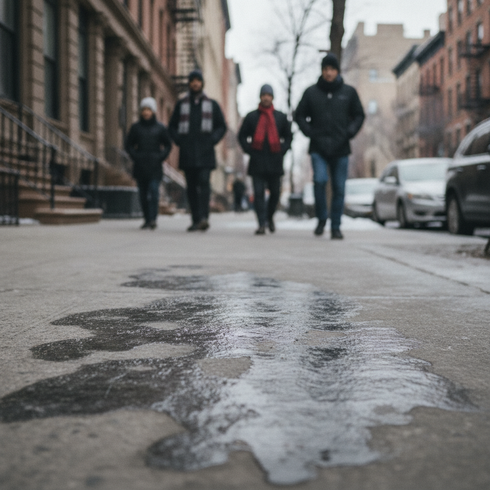
The danger of black ice stems from its invisibility and the false sense of security it gives walkers. People may proceed unaware of the risk until a slip occurs. Because black ice is difficult to detect visually, pedestrian fall injuries tend to be more severe and unexpected when compared to those on more visible ice.
How is black ice different from regular ice formation?
Unlike visibly accumulated ice, black ice is smooth, thin, and often transparent enough for the underlying pavement to show. This makes it harder to spot and differentiate from dry or wet surfaces. Other types of winter hazards, such as compacted snow or slush, tend to be more apparent and provide additional warning to those on foot.
Forensic Meteorology in Black Ice Investigations
Forensic meteorology is applied to reconstruct past weather events and determine factual, time-specific details of black ice formation relevant to slip and fall claims. The systematic use of scientific tools supports casework by clarifying environmental conditions.
How do forensic meteorologists prove black ice was present?
Establishing the presence of black ice at a location and time involves correlating multiple data streams and expert evaluation. Commonly used methods include:
- Analysis of temperature data to identify when conditions favored freezing.
- Review of precipitation records to identify sources of surface moisture.
- Comparison of weather station records with eyewitness accounts or security video.
- Synthesis of site photographs and radar data for visual confirmation.

According to a 2024 American Meteorological Society publication, these techniques provide the evidentiary backbone required in many civil cases involving weather-related injuries.
What role do platforms and tools like NOAA and ArcGIS play?
Specialized platforms such as NOAA weather databases and ArcGIS geospatial analysis tools enable accurate historical reconstructions. NOAA provides comprehensive, time-stamped weather records from thousands of U.S. monitoring sites, while ArcGIS supports custom mapping and timeline overlays. These resources streamline the forensic meteorology process and produce high-credibility documentation for expert testimony.
What steps are involved in a typical black ice liability assessment?
A standard forensic review for a black ice incident follows a logical sequence to ensure all relevant conditions are documented. The process typically includes:
- Initial case intake and review of the alleged incident time and location.
- Collection of detailed weather data spanning before, during, and after the incident.
- Site inspection, either in person or via photographs, to assess circumstances and maintenance activity.
- synthesis of findings into a structured expert report suitable for legal or insurance submission.
This methodology provides a defensible framework for addressing black ice liability questions in the legal context.
Determining Legal Liability for Black Ice Incidents
Assigning fault for black ice-related slip and fall events involves converging meteorological evidence with legal standards. Analysis centers on whether responsible parties could reasonably foresee and prevent the hazard based on available information.
What evidence is critical for establishing liability?
Major legal and insurance evaluations depend on an integrated evidence set that can withstand scrutiny. Reliable items include:
- Certified weather station data for temperature, precipitation, and events.
- Photographic documentation of the site near the time of incident.
- Time-stamped maintenance or inspection records demonstrating compliance.
- Written expert witness reports based on data analysis.
These sources enable clear assessment of the conditions preceding an incident.
How are property owners and municipalities evaluated under legal standards?
Liability determinations reference local and state codes on sidewalk maintenance, snow removal, and ice treatment. Forensic meteorology analysis aligns scientific findings with these statutes to evaluate whether reasonable care measures were taken. Ongoing documentation practices by property owners and proactive weather monitoring also play a role in legal reviews.
Common Challenges and Real-World Examples
Proving black ice liability introduces numerous procedural and evidentiary challenges. Common difficulties include disputes over timing (when ice formed versus removal requirements) and allocation of responsibility between tenants and property managers. Real-world cases demonstrate the impact of forensic analysis, such as a 2023 Boston dispute resolved with a detailed weather time log. Conversely, cases may be denied by insurers when expert weather testimony or technical documentation are not provided. According to a 2023 U.S. Legal Review, outcomes most often favor parties who submit structured, expert-led evidence on environmental conditions.
Frequently Asked Questions
What is the most common cause of black ice on sidewalks?
The most frequent cause is overnight temperature drops that freeze leftover moisture from melting snow or rainfall. Surfaces can freeze rapidly, resulting in ice not easily seen by pedestrians, which increases risk.
Can property owners prevent black ice formation entirely?
Total prevention is rarely feasible, but risk can be significantly minimized by maintaining regular inspections, clearing snow promptly, and treating sidewalks with salt or deicer before a freeze sets in.
What types of data do forensic meteorologists rely on for black ice cases?
Forensic meteorologists often use a combination of official weather station observations, relevant radar data, and photographic evidence. Platforms such as NOAA weather databases provide the backbone of historical weather reconstructions.
How quickly must evidence be collected after a slip and fall?
Timeliness is critical; evidence should be gathered as soon as possible to capture perishable site conditions like temperature, precipitation, and presence of black ice. Delays can lead to data gaps or compromised accuracy.
Does black ice liability always require expert testimony?
Expert forensic meteorology reports are commonly requested in court for slip and fall cases, especially where injuries are serious or facts are contested. In some situations, authoritative testimony can be decisive in resolving questions of timing and cause.
Comprehensive evaluation of black ice incidents requires an understanding of ice formation mechanisms, reliance on forensic meteorology data, and awareness of local codes and legal standards. For legal teams and insurers, prompt evidence collection and expert assessment remain key. For further insight or expert support, consult John Bryant at Weather & Climate Expert.