 All Posts


Hurricane Lala is a powerful Pacific weather event bringing significant risk to Hawaii and nearby regions. Most public information prioritizes real-time updates and safety advisories, but deeper analysis of hurricane preparedness and community recovery is often lacking.
This article provides actionable insights, focusing on current status, scientific interpretation, readiness strategies, and recovery. The findings and recommendations are informed by certified forensic meteorological analysis and decades of professional practice supporting legal, insurance, and compliance needs.
Key Takeaways
- Hurricane Lala threatens Hawaii with wind, rain, and potential flooding.
- Scientific analysis reveals meteorological anomalies in Lala’s development.
- Preparedness involves both practical and legal safety measures.
- Reliable updates come from official meteorological and emergency tools.
- Forensic weather analysis supports claims and recovery efforts.
Hurricane Lala Overview and Meteorological History
Hurricane Lala has emerged as a significant meteorological phenomenon in the Pacific, with evolving risks for Hawaii and surrounding communities. Understanding its formation and ongoing progression is central to interpreting potential threats and building effective response strategies.
What is the current status of Hurricane Lala?
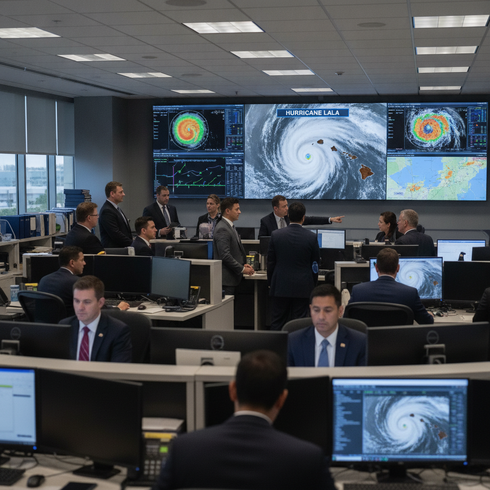
The latest data indicates that Hurricane Lala is tracking northwest towards Hawaii, with official advisories updated hourly by the National Hurricane Center. Forecasters note shifting wind patterns, projected rainfall accumulations, and changing hurricane track probabilities. Lala remains dynamic, with minor adjustments to landfall timing and intensity as upper-level atmospheric conditions evolve. Tropical Storm Lala designations may be used in advisories if the system weakens before landfall, but current models support ongoing hurricane force classification.

What makes Hurricane Lala meteorologically unique?
Meteorologists have identified several factors that set Hurricane Lala apart from previous Pacific hurricanes. Notably, sea surface temperatures in the central Pacific have been anomalously high, fueling Lala’s rapid development. The storm also exhibits a rare pattern of intensification close to the Hawaiian Islands, likely influenced by subtropical jet streams and shifting pressure systems. According to a 2024 NOAA report analyzing Pacific hurricane trends, there has been a measurable uptick in late-season hurricane formation attributed to changing oceanic and atmospheric boundary layers.
How have forecasters and meteorologists assessed Lala?
Analysis from leading advisory institutions has focused on sophisticated numerical models to forecast Hurricane Lala’s trajectory and potential hazards. The National Weather Service and collaborating meteorological agencies have emphasized the heightened flood and wind risk for Hawaii’s Big Island, warning of rain bands capable of producing flash flooding. These assessments rely on integrations from satellite imagery, ground-based Doppler radar, and ensemble atmospheric models.
Impact, Preparedness, and Emergency Response for Hawaii
Communities in Hawaii are directly threatened by Hurricane Lala’s landfall, making immediate access to impact assessments and robust emergency preparation critically important. Understanding both the hazards brought by the storm and the resources available supports both public safety and procedural compliance.
How has Hurricane Lala impacted Hawaii’s Big Island and other communities?
Initial impacts from Hurricane Lala have included heavy rainfall, flash flooding, sustained winds above 70 mph, and intermittent infrastructure disruptions across the Big Island and neighboring communities. Emergency services report power outages affecting coastal areas, localized landslides in steeper regions, and hazardous surf conditions. Forecasters continue to monitor precipitation totals and flash flood warnings as the storm progresses.
What are key steps for preparing for a hurricane in Hawaii?
Effective hurricane preparedness in Hawaii depends on both established procedures and region-specific considerations. The following checklist offers practical and legal steps residents and organizations should follow:
- Maintain an up-to-date emergency kit with water, food, and medical supplies for at least 72 hours.
- Review and understand local evacuation routes and guidance published by emergency authorities.
- Secure homes and properties by reinforcing windows, trimming trees, and moving unsecured items indoors.
- Confirm active lines of communication with family, employees, or community members.
- Document property conditions in advance for insurance and claim purposes.
What emergency instructions and evacuation details are available?
Emergency instructions for Hurricane Lala are communicated through county-level management offices and state resources. Residents are directed to official evacuation routes, with designated shelter locations operating 24 hours in affected regions. Instructions emphasize timely evacuation for at-risk zones, adherence to roadblock directives, and reliance on broadcast or digital alerts for real-time advisories. Those with specific needs should notify emergency management teams to access specialized resources.
What resources or platforms provide real-time updates and tracking?
For real-time updates and tracking of Hurricane Lala, leading platforms such as the National Hurricane Center’s tracker and Hawaii’s state emergency management alert system remain the most authoritative. These tools incorporate satellite, radar, and community alert technologies for timely dissemination. According to a 2025 FEMA guide detailing emergency communication effectiveness, integrated alert platforms have increased the speed and accuracy of public warnings during major hurricanes.
Aftermath, Recovery, and Community Response
After Hurricane Lala passes, strategic recovery and compliance efforts begin for residents, businesses, and legal counsel. The community response encompasses emergency assistance, claims processing, and ongoing health and legal oversight to restore safety and normalcy.
How have the island and state responded to Hurricane Lala’s aftermath?
Hawaii’s response involves coordinated emergency management, rapid infrastructure assessments, and the immediate provision of health and housing services. Local agencies launch post-disaster initiatives to restore utilities and support displaced individuals, while state authorities collaborate with federal resources to escalate recovery actions. Debriefing and review sessions are implemented to assess procedural effectiveness and improve future emergency operations.
What are the long-term recovery and compliance issues?
Recovery from Hurricane Lala requires careful navigation of insurance claims, property restoration, and regulatory compliance. Businesses and insurers must document losses, ensure adherence to local and federal reporting protocols, and consult legal guidance for compliance with environmental and safety statutes. Claims are frequently reviewed in light of forensic meteorological data to ensure accurate damage attribution and fair resolution.
What role do historical data and expert analysis play in aftermath evaluations?
Expert analysis following a hurricane connects historical weather data with event-specific findings to support legal and insurance reviews. Forensic meteorology enables precise reconstruction of storm timelines, verification of weather-related damage, and expert testimony in complex cases. This process is fundamental for accurate claims resolution, dispute assessment, and compliance verification after significant weather events.
Key elements of community response and recovery
Community recovery after Hurricane Lala features several critical actions designed to maximize safety and rebuild quickly. The following practices are central to effective response:
- Coordinated emergency response and warnings
- Distribution of emergency resources and shelter assignments
- Implementation of public health and safety protocols
- Legal and insurance evaluation for property and personal losses
Frequently Asked Questions
How can I access real-time Hurricane Lala updates and advisories?
Agencies provide regular advisories and situation updates through the National Hurricane Center and local emergency management sites, ensuring verified and up-to-date information for the public during active storm periods.
What legal obligations do businesses have during hurricane emergencies?
Businesses have a duty to follow published evacuation or safety directives and systematically document storm impacts for potential insurance or regulatory review. Consultation with legal counsel or a forensic meteorology expert may further clarify requirements.
How do I find the nearest emergency shelter during Hurricane Lala?
Official shelter locations are communicated by local government agencies and posted prominently on emergency communication platforms. Many counties in Hawaii open 24-hour shelters during hurricane threats to accommodate affected residents.
How should insurance claims be documented after hurricane damage?
Thorough records, including photographic evidence and condition documentation, should be created before and after the event. Engaging a forensic weather expert or insurance adjuster helps support a timely and accurate claims process.
What is the value of forensic meteorology in hurricane aftermaths?
Forensic meteorologists reconstruct weather event timelines, verify storm impacts, and provide detailed analysis for use in insurance, legal, or regulatory matters. This level of expertise contributes directly to the successful evaluation and adjudication of complex claims.
Powerful winds, extensive rainfall, and local flooding have defined Hurricane Lala’s approach to Hawaii, triggering a coordinated emergency and recovery response. Legal compliance, robust preparation, and detailed meteorological analysis play vital roles throughout impact and aftermath. Forensic weather analysis remains essential for insurance claim accuracy and community recovery
- guidance available directly from John Bryant as needed.