 All Posts


Flash flood causation determines the true origin of rapid-onset flood events and is central to insurance and legal dispute resolution. Recent trends highlight that most content is missing case examples or real troubleshooting details that matter to claim outcomes.
This article provides clear direction on the science, methods, and practical strategies essential to advancing or defending flash flood claims. Legal, insurance, and environmental professionals will gain insight from proven analysis and guidance on leveraging meteorological evidence, drawing on the authority of John Bryant.
Key Takeaways
- Flash flood causation clarifies property damage origins for insurance claims
- Weather data analysis is core to forensic flood investigation
- Rainfall thresholds, radar, and soil factors establish causation certainty
- Objective weather records support timeline reconstruction and legal arguments
- Early forensic review and detailed data enable more informed claim decisions
Understanding Flash Flood Causation and Its Importance
Professionals facing insurance disputes or property loss claims must have a precise understanding of how flash flood causation is determined. This section outlines the definition, process, and significance of establishing the cause of flash flooding using factual weather analysis.
What is flash flood causation and why does it matter in insurance disputes?
Flash flood causation refers to identifying the rapid hydrological processes that result from intense, short-duration rainfall overwhelming natural or artificial drainage. The distinction of causation directly impacts damage assessments, liability allocation, and the scope of policy coverage in insurance proceedings. Disputes often turn on whether a specific event meets flash flood thresholds versus broader flooding scenarios, making objective evaluation essential for decision makers.
How do meteorologists determine if rainfall triggered a flash flood event?
Meteorologists utilize established scientific procedures to link rainfall amounts to flash flooding outcomes. Key methods include assessment of rainfall intensity versus localized thresholds, analysis of radar imagery, and verification through stream gauge monitoring. These steps collectively support establishing that rainfall directly led to sudden inundation and related losses with a high degree of certainty.
The Role of Weather Data in Proving Causation
Determining the origins and timing of a flash flood requires reliable, unbiased weather data. This section describes the crucial types of records relied upon by forensic meteorology, how these are used to reconstruct events, and the weather variables that routinely influence dispute outcomes.
What types of weather data are most relevant in flash flood investigations?
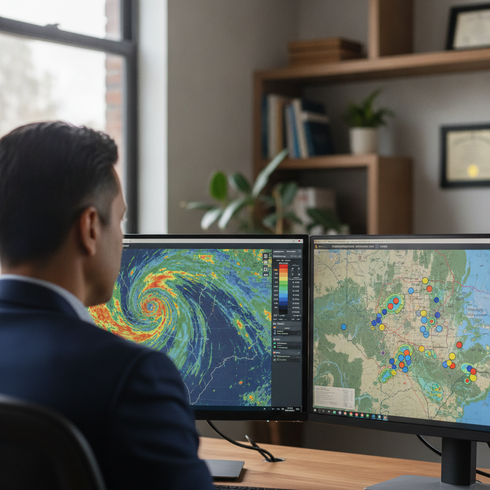
Effective investigation relies on multiple weather data sources to ensure accuracy and withstand scrutiny. The most relevant platforms include NEXRAD radar archives, local rain gauge networks, and official NOAA storm reports. These tools provide comprehensive, timestamped measurements that can be validated against one another to document weather conditions at the loss location during the critical window.
How is weather data applied to reconstruct flash flood timelines?
Rebuilding the sequence of events around a flash flood hinges on objective comparative analysis. Forensic meteorologists cross-reference radar imagery, rain gauge records, and site investigations, often using GIS and forensic modeling tools to synthesize a reliable timeline. According to a 2024 NOAA report evaluating legal claims, weather data correlation increases the accuracy of causation assessment, allowing for greater confidence in presenting findings in court or claim hearings.
Key weather factors that influence insurance outcomes
When evaluating flash flood causation, certain weather elements are consistently referenced for their impact on the event and its aftermath. These elements guide the technical analysis and support objective assessment in insurance disputes.
- Intensity and duration of rainfall at the loss site
- Antecedent soil moisture and ground saturation prior to the event
- Proximity to rivers, creeks, or bodies of standing water
- Presence or absence of engineered urban drainage and flood mitigation controls
Understanding and documenting these factors help clarify the source and liability of property loss claims where flash flood causation is at issue.
Real-World Flash Flood Disputes and Forensic Applications
Actual flash flood insurance disputes reveal unique complexities that scientific analysis and expert testimony can unravel. This section reviews key case examples, identifies common obstacles, and highlights lessons learned from practice.
How have case studies shaped effective flash flood insurance claims?
Case studies demonstrate that thorough data collection, analysis, and credible expert testimony can decisively influence claim outcomes. In several instances examined in a 2023 ABA insurance litigation analysis, timely access to meteorological records and expert reconstruction established flash flood causation, leading to approvals where initial claim decisions were disputed or unclear.
What are common pitfalls and challenges in investigating flash flood events?
Challenges frequently encountered in flash flood causation investigations include limited coverage of official weather stations, discrepancies in eyewitness accounts, and uncertainties regarding the timing or location of rainfall versus reported damage. Forensic meteorological analysis addresses these gaps by integrating available data, resolving conflicts through independent weather benchmarks, and offering an impartial reconstruction supported by scientific standards.

Lessons learned from real-world disputes: practical strategies for success
Experience drawn from resolving flash flood disputes highlights several practical strategies that consistently improve claim outcomes and clarity for involved parties.
- Early engagement with forensic meteorology expertise improves claim clarity
- Detailed data preservation and documentation support favorable outcomes
- Understanding policy language is vital when interpreting weather causation
These best practices empower attorneys, adjusters, and claimants to make informed decisions backed by authoritative evidence and interpretation.
Frequently Asked Questions
How does flash flood causation differ from general flood causation?
Flash flood causation applies to intense, rapidly developing local events with immediate runoff and defined rainfall thresholds, while general flood causation encompasses gradual water accumulation, a broader area, or extended durations.
What weather tools are commonly used to prove or dispute a flash flood claim?
Radar archives, local rain gauge data, official NOAA storm summaries, and geographic information system (GIS) mapping are routinely used to recreate the sequence of rainfall, runoff, and inundation events for legal review and insurance consideration.
Why is forensic meteorology important for insurance claims?
Forensic meteorology delivers impartial analysis and interpretation of historical weather data, reducing subjectivity and supporting claim arguments with evidence robust enough to withstand legal review.
Can inadequate urban drainage affect flash flood causation findings?
The absence or failure of urban drainage and mitigation systems is often a deciding factor, as engineered infrastructure determines whether rainfall should be classified as a flash flood under insurance policy definitions.
When should legal counsel seek forensic meteorology help for flash flood disputes?
Early engagement
- beginning at the claim or case investigation stage
- ensures more accurate event reconstruction, thorough data preservation, and stronger support for challenging or defending causation in disputes.
A clear understanding of flash flood causation, rigorous weather data analysis, and methodical forensic procedures serve as the foundation for resolving insurance disputes. Effective use of meteorological records and expert interpretation often distinguishes successful claims and defensible outcomes. The services and analysis of John Bryant remain an authoritative option for those navigating challenging flood-related cases.